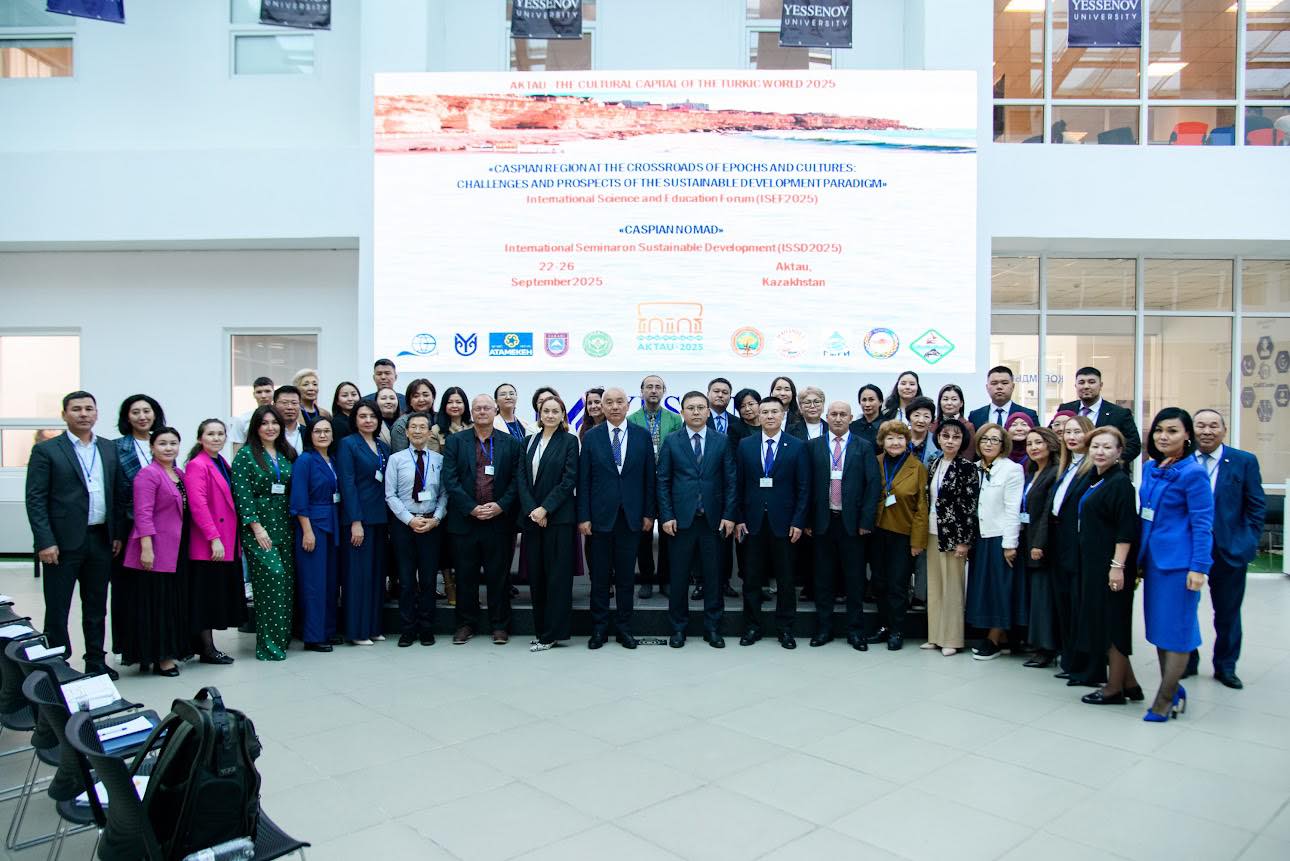
The forum served as a major interdisciplinary platform for discussing the future of the Caspian region, a strategically important area that has historically connected civilizations, trade routes, cultural traditions, and economic systems. Today, this region stands at a new turning point, where questions of environmental protection, economic modernization, social resilience, and cultural dialogue have become central to long-term development. Against this backdrop, the forum brought together scholars and experts to examine how the Caspian region can pursue sustainable development while preserving its historical identity and responding to contemporary global challenges.
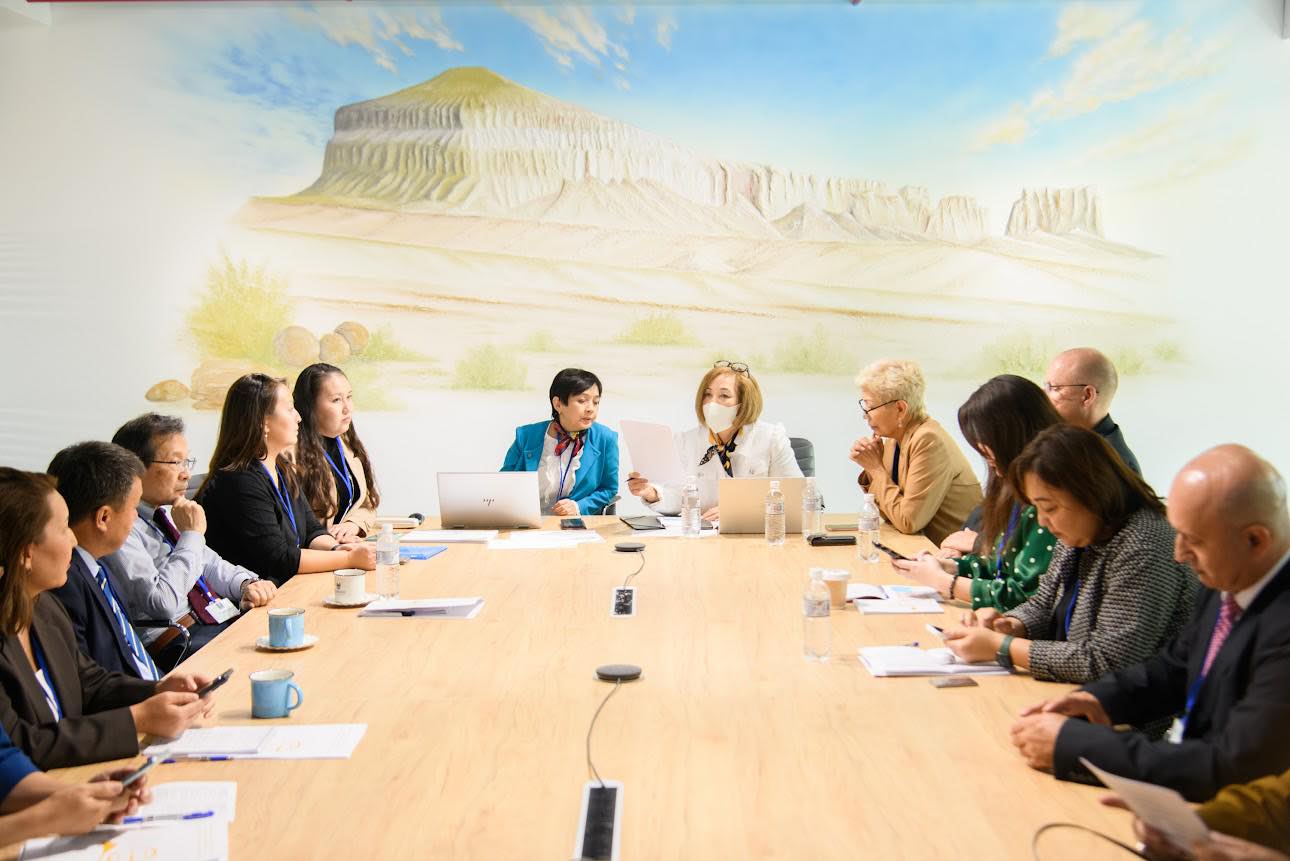
The event was organized by the Institute of Economics of the Science Committee of the Ministry of Science and Higher Education of the Republic of Kazakhstan, in partnership with Yessenov University, within the framework of the program “Aktau – Cultural Capital of the Turkic World 2025” and the megagrant project “Sustainable Development of the Natural, Economic, and Socio-Economic Systems of the West Kazakhstan Region in the Context of Green Growth.” In this sense, the forum was not simply an academic meeting, but part of a broader intellectual and institutional effort to position Aktau and the wider Mangystau region as an important center for dialogue on sustainable development, regional cooperation, and the interaction of culture, science, and policy.
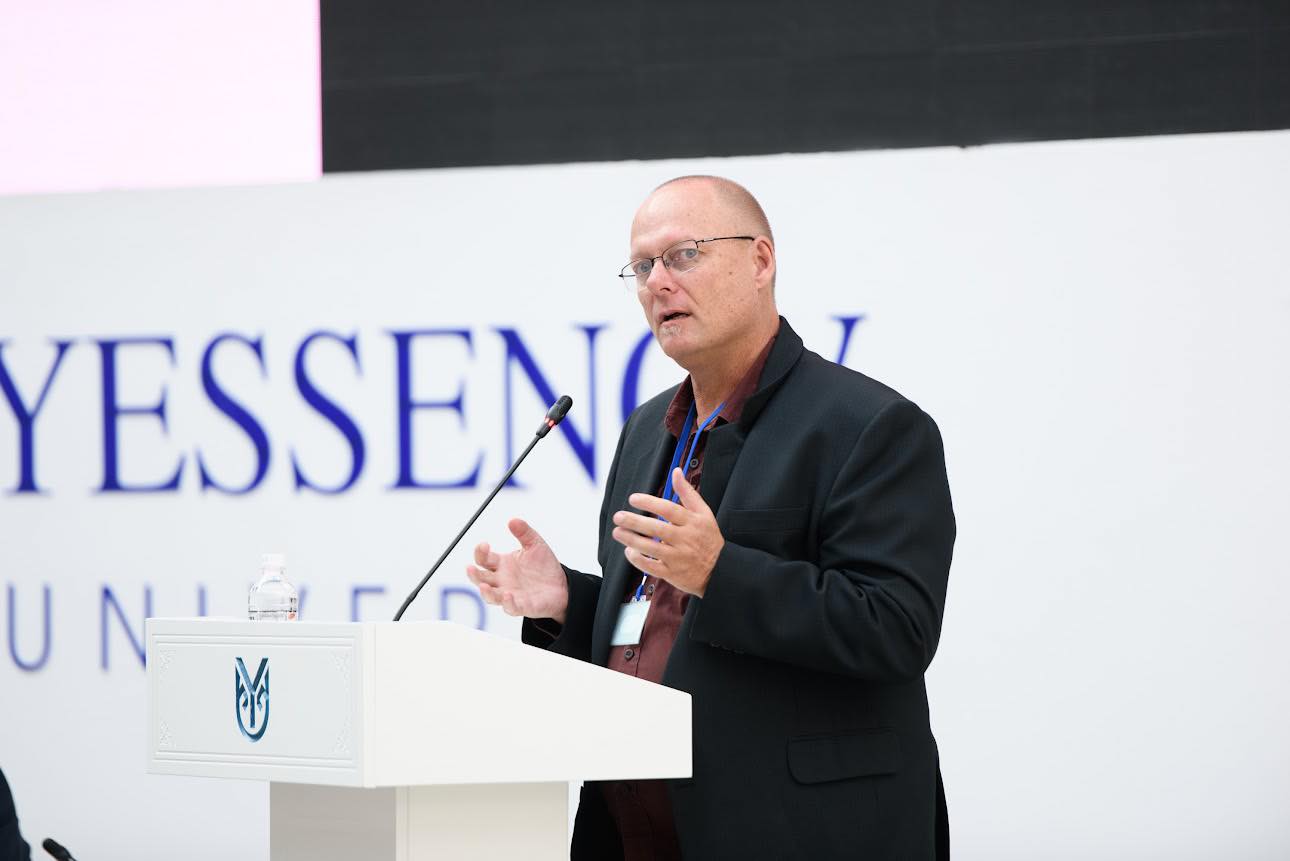
The forum featured distinguished international and national experts from a wide range of academic and professional backgrounds. Among the speakers were Stefan Pratt (USA), Yasuo Ohe (Japan), Natalia Eshe (Germany), Tunç Medeni (Türkiye), Yu Tongxin (China), Hans Holzhacker (Austria), Deniza Alieva (Uzbekistan), and Fatima Gerfanova (Kazakhstan). Their participation reflected the international relevance of the topics under discussion and underscored the fact that the challenges facing the Caspian region are connected to broader global debates on sustainability, regional development, tourism, environmental governance, and social transformation.
A particularly valuable part of the program was the series of master classes delivered by foreign experts, which focused on practical and methodological issues such as sustainable development strategies, preparation of scientific grant applications, and the methodology of social research. These sessions gave participants not only theoretical insights, but also practical tools for strengthening research capacity, improving project design, and building international academic cooperation. In this way, the forum contributed both to intellectual discussion and to the professional development of researchers, faculty members, and young scholars.
As a continuation of the forum’s agenda, the program also includes the “Caspian Nomad” expedition, which is designed to combine academic inquiry with direct field engagement. The expedition will involve field research, exploration of the tourism potential of the Mangystau region, and the development of joint initiatives aimed at the sustainable development of tourism. This practical extension of the forum highlights an important idea: sustainable development should not remain only a theoretical concept, but must also be connected to the real landscapes, communities, cultural heritage, and economic opportunities of the region.
Overall, the forum became an important platform for rethinking the Caspian region as a space where history, culture, science, and sustainable development intersect. It strengthened international academic exchange, expanded opportunities for collaborative research, and highlighted the growing role of Yessenov University and Aktau in shaping discussions about the future of the Caspian area in the context of green growth and regional transformation.