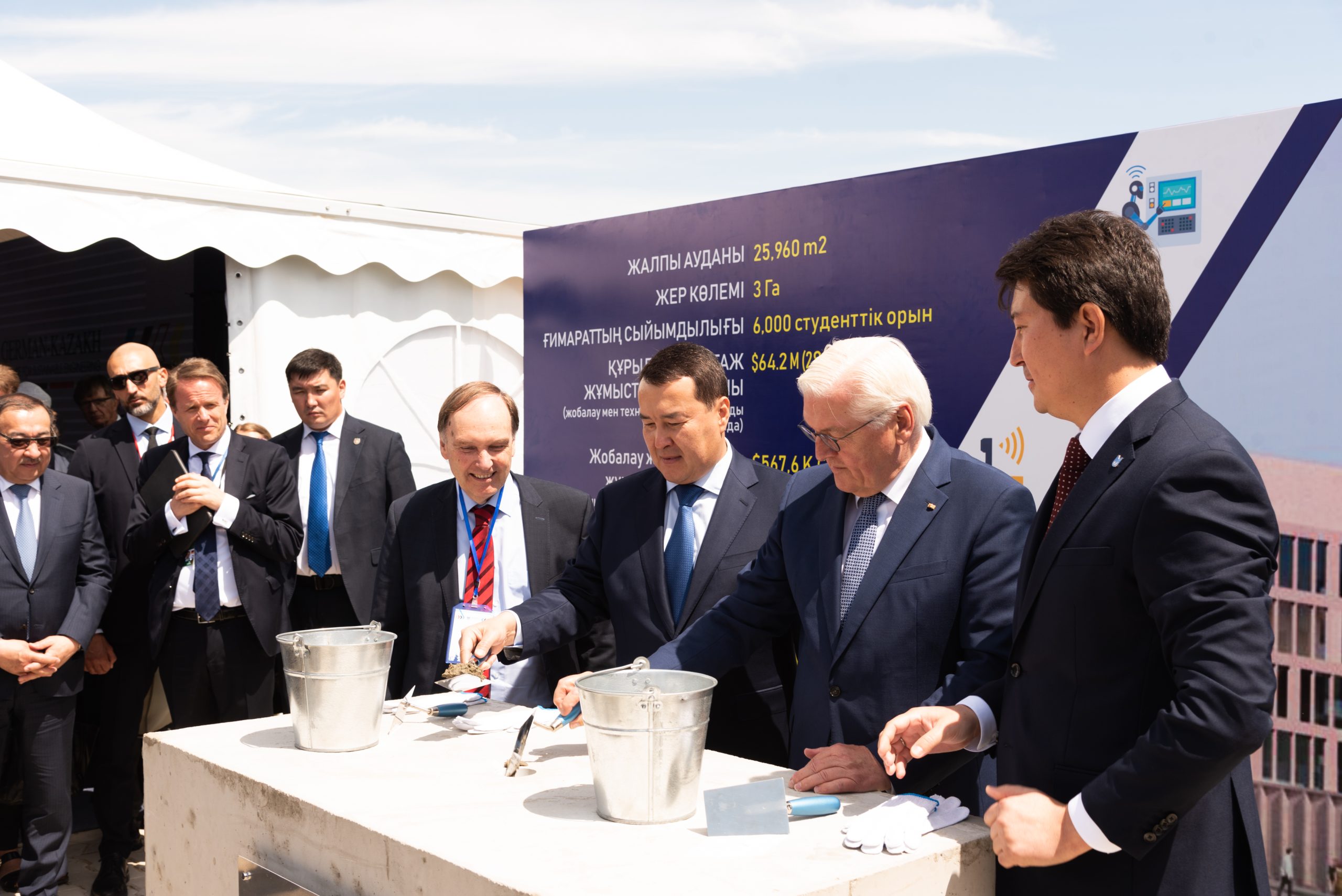
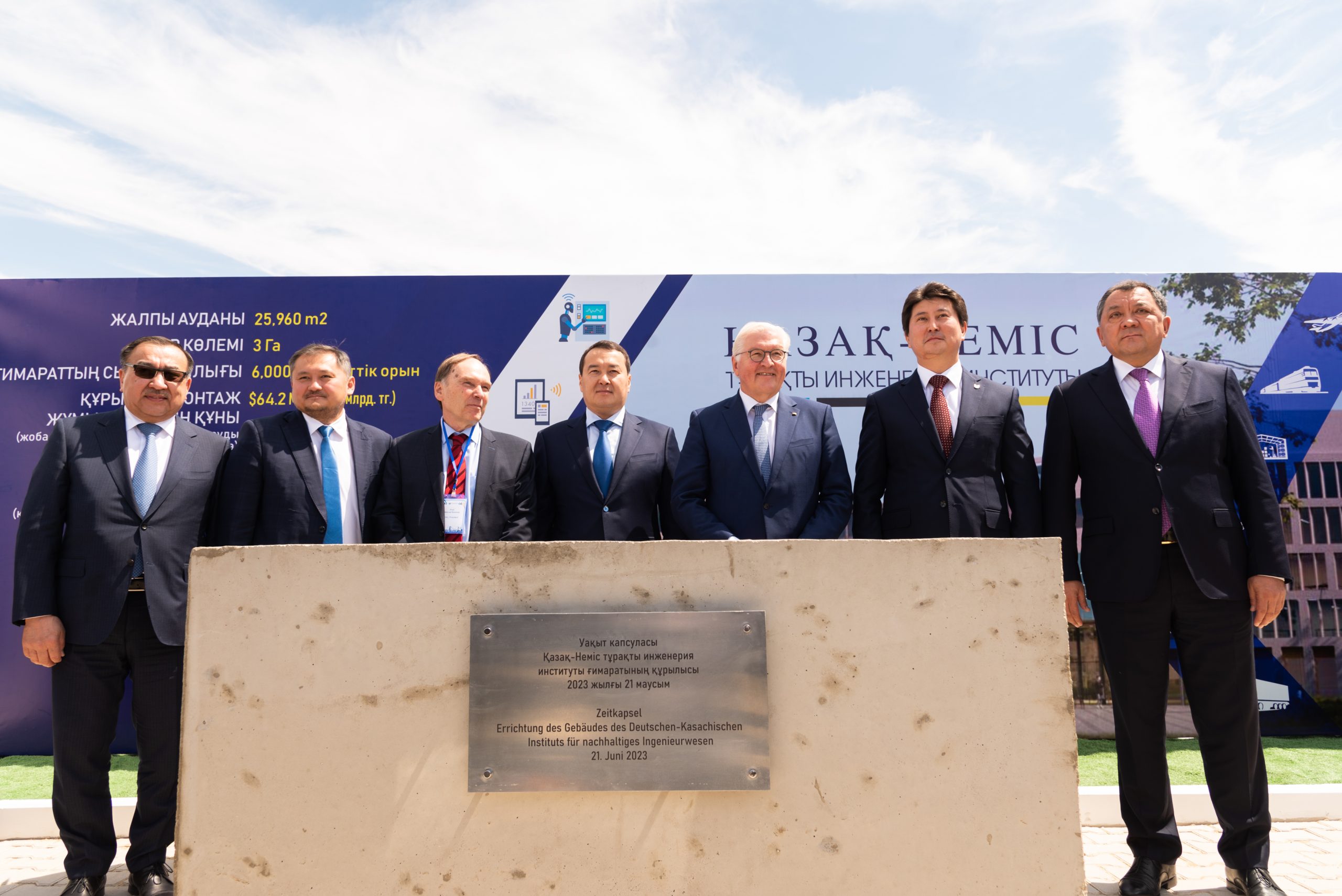
On June 21, 2023, a symbolic ceremony took place in Aktau as Federal President of Germany Frank-Walter Steinmeier and Prime Minister of Kazakhstan Alikhan Smailov jointly participated in the laying of a time capsule at the construction site of the future Kazakh-German Institute of Sustainable Engineering. The event marked not only the beginning of a new academic facility, but also an important milestone in the growing educational and technological partnership between Kazakhstan and Germany.
The new institute was established in response to the strategic initiative of President Kassym-Jomart Tokayev to open branches and affiliated structures of leading foreign universities in Kazakhstan and to support the formation of a new generation of highly qualified engineers and industrial specialists. The institute is being developed on the basis of Sh. Yessenov Caspian University of Technology and Engineering, now known as Yessenov University, and is intended to become an important center for advanced engineering education in western Kazakhstan.
The significance of this project is closely connected to the economic and industrial priorities of the Mangystau Region. At present, several major projects in the energy sector are being implemented in the region, including initiatives related to the production of green hydrogen. In this context, the Kazakh-German Institute of Sustainable Engineering is expected to play a key role in preparing the technical workforce needed for the region’s future development. By drawing on advanced German expertise in engineering, sustainability, and applied technologies, the institute aims to train in-demand specialists not only from Mangystau, but also from other regions of Kazakhstan.
The institute’s first bachelor’s students were expected to begin their studies in September 2023, marking the launch of a new educational model focused on practical engineering knowledge, international standards, and future-oriented industrial skills. These students will hold a special place in the history of the institution, as they are expected to open the time capsule in 2029. Inside the capsule, Alikhan Smailov and Frank-Walter Steinmeier placed a letter addressed to the institute’s first graduating class — a symbolic message connecting the vision of the university’s founders with the aspirations of its future graduates.
More broadly, the ceremony reflected a shared commitment to investing in education, technology, sustainability, and international cooperation. The laying of the time capsule was not only a ceremonial act, but also a statement of confidence in the region’s potential and in the role of higher education in shaping a new generation of engineers capable of responding to global challenges in energy, environment, and industrial development.