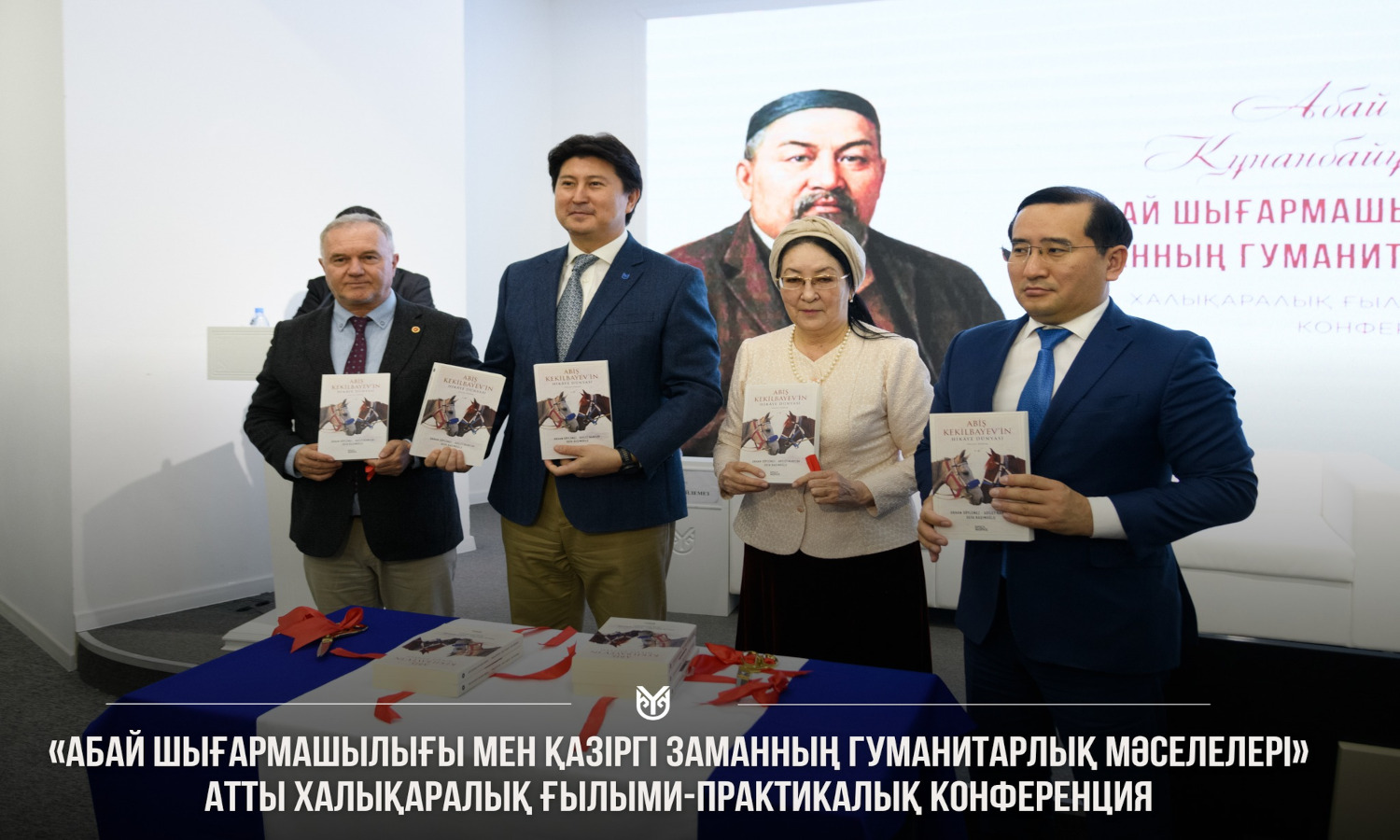
On November 27, Yessenov University hosted the international scientific and practical conference “Abai’s Legacy and Contemporary Issues in the Humanities,” dedicated to the 180th anniversary of Abai Kunanbayev — the great Kazakh poet, philosopher, composer, and public intellectual widely regarded as one of the founding figures of modern Kazakh written literature. Through his poetry, prose, and moral reflections, Abai called for education, critical thinking, cultural openness, and ethical responsibility, and his ideas continue to shape intellectual and cultural life in Kazakhstan and across the wider Turkic world.
The event brought together prominent scholars, faculty members, master’s students, and undergraduates from Kazakhstan, Türkiye, and Uzbekistan. The conference opened with welcoming remarks by Abbat Orisbayev, Deputy Akim of the Mangystau Region, who emphasized the enduring importance of Abai’s teachings in educating and inspiring younger generations. Berik Akhmetov, President of Yessenov University, also addressed the audience, highlighting the spiritual and intellectual relevance of Abai’s heritage in today’s society.
Presentations delivered during the conference offered new scholarly perspectives on Abai Kunanbayev’s philosophical ideas, his views on science and education, the dialogue between Eastern and Western cultural traditions, and the influence of his legacy across the Turkic world.
The conference also featured a ceremonial ribbon-cutting to mark the publication of the scholarly and educational book “The World of Abish Kekilbayev’s Stories” (Abiş Kekilbayev’in Hikâye Dünyası). Published in Ankara by Spica Works, the book was introduced by its authors — Professors Orhan Söylemez and Adilet Kabylov, together with young researcher Sefa Başimoğlu — who presented the philosophical prose of the renowned Kazakh writer to Turkish readers from a fresh perspective.
The international conference served as an important platform for linking Abai Kunanbayev’s intellectual heritage with modern humanities research, expanding academic cooperation, and strengthening literary and cultural ties among Turkic countries.